
Published: Jun 30, 2026 | Last Updated: Jun 10, 2026
Author: Tom Hendrix, CEO & Founder LoyaltycardTools. Tom is a digital entrepreneur with 25 years of experience and founded several succesful SAAS platforms like Coupontools, Smstools & LoyaltycardTools.
As consumer habits evolve and mobile device usage soars, traditional paper punch cards are rapidly being replaced by digital loyalty cards. But what exactly is a digital loyalty card, and how can it empower small businesses to cultivate loyal customers and drive repeat sales? This comprehensive guide will help you understand digital loyalty cards, how they work, their advantages, and how to launch your own digital loyalty program quickly and effectively.
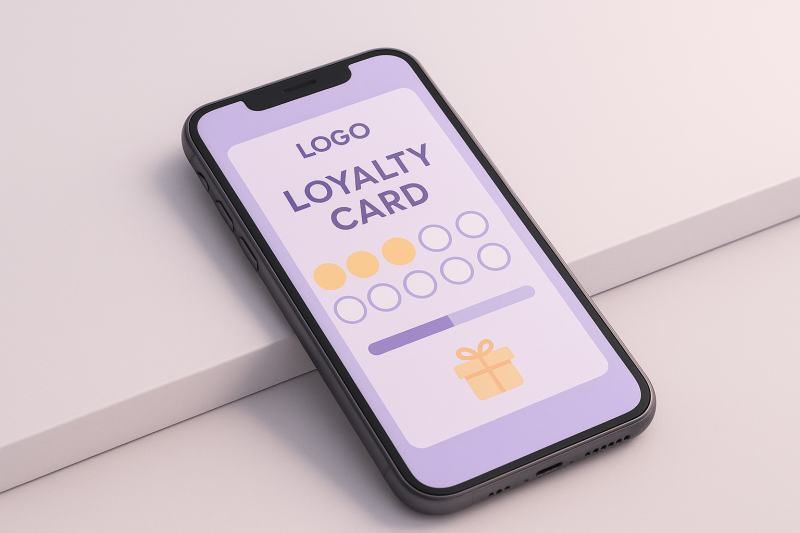
A digital loyalty card is an electronic form of a traditional loyalty or stamp card, allowing businesses to reward repeat customers digitally—usually via a mobile wallet (such as Apple Wallet or Google Wallet). Customers simply present their smartphone at the point of sale to earn stamps, unlock rewards, and redeem offers, making reward tracking seamless and contactless.
Digital loyalty cards can be structured as digital punch cards (collect X stamps for a reward) or as digital membership cards (providing ongoing benefits to members). They are delivered and stored on a customer’s smartphone in a secure, easy-to-access format—eliminating the need for printing, physical storage, or manual tracking.
Digital loyalty cards use web-based or app-driven platforms like Loyaltycardtools to make loyalty programs fast, automated, and user-friendly. Here’s an overview of how the process typically works:
Switching to digital loyalty cards is far more than a nod to tech-savvy consumers. Here are the leading advantages for small businesses:
Punch cards, sometimes called stamp cards, reward customers for repeat visits or purchases. After a set number of visits (e.g., "Buy 9 coffees, get the 10th free"), the reward is unlocked automatically. This model is highly effective in cafes, salons, and small local retailers.
Learn more about how punch cards work on our Digital Punch Card page.
Membership cards go further, identifying loyal customers and providing them ongoing or tiered benefits—such as member-only discounts, early access sales, or birthday rewards. Members receive a digital card stored in their wallet, and staff can quickly check membership status at each visit.
Discover the benefits of a membership program at our Digital Membership Card solution page.
Are you seeking to increase visit frequency, boost average spend, or gather valuable customer data? Clarify your objectives first. This will influence the type of program you create and the rewards you offer.
Select a trusted SaaS provider with features tailored for small business needs. For example, Loyaltycardtools enables you to design and deploy digital cards within minutes—no coding or complex setup needed.
Customize your digital card with your branding, colors, and logo. Decide on the stamp or membership benefits, and set up clear reward thresholds or perks.
Integrate your loyalty program with your existing systems. Using platforms like Make.com, you can connect your CRM or webshop for seamless automation, customer syncing, and trigger-based rewards. This saves time and eliminates manual processes.
Share your digital card across all touchpoints: at the register, on receipts, via email newsletter, and your social media. Train your staff on quick validation and redemption protocols. As customers enroll, you’ll quickly see engagement rise.
Start your free trialTo see examples tailored to your industry, view our solutions for restaurants, hospitality, and retail.
| Feature | Digital | Traditional |
|---|---|---|
| Delivery Method | Via mobile wallet or SMS link | Physical card handed to customer |
| Tracking | Automatic, real-time | Manual, easily forgotten/lost |
| Customer Engagement | Push notifications/SMS reminders | None |
| Eco-Friendliness | Paperless | Resource-intensive |
| Analytics | Comprehensive, actionable | Limited or none |
By leveraging the native mobile wallet, your loyalty program stands out for its accessibility and engagement. Not only do customers appreciate the convenience, but businesses gain a branded presence on the customer’s most-used device. This leads to increased participation and higher redemption rates compared to traditional or app-based programs.
Successful digital loyalty programs rely on making enrollment fast and effortless. Use prominent QR codes in-store, on receipts, and within digital communications. An incentive (like a welcome reward) helps boost initial uptake.
Promote your loyalty card on your website, social feeds, and customer emails. Demo how easy it is to add and use, and highlight the value of your rewards to spark interest.
For best-in-class automation, connect your loyalty program with your CRM or e-commerce platform via Make.com. This allows for real-time syncing of customer data, automated reward triggers, and omnichannel tracking—bringing professional-level capabilities to small and medium businesses. Learn more about automation possibilities and pricing on our Pricing page.
Start your free trialDigital loyalty cards are more secure and private than physical alternatives. Customer data is encrypted and securely stored. Unlike plastic cards, there’s no risk of sensitive information being lost or misused. Transparency in your data practices—and compliance with privacy laws such as GDPR—builds trust with your customers.
After launch, use real-time analytics to measure:
Use these insights to refine your offers, adapt your messaging, and increase your overall program ROI over time.
Start your free trialDigital loyalty cards represent a major opportunity for small businesses to drive retention, boost sales, and deliver customer experiences once only possible for big brands. With easy setup, strong automation, and clear business insights, you can stand out from local competition and future-proof your customer relationships. Ready to try for yourself? Sign up for a free trial and start rewarding your customers digitally, today.
A digital loyalty card is an electronic version of a traditional loyalty, punch, or membership card, enabling customers to collect stamps, track rewards, and redeem offers via their smartphone.
Customers add digital loyalty cards to their phone’s wallet by scanning a QR code, clicking a link, or receiving an SMS/email invite from the business.
No. Digital loyalty cards can be stored in native apps like Apple Wallet or Google Wallet without requiring a separate third-party app.
Yes! Platforms like Loyaltycardtools make it easy and affordable for small businesses to set up professional digital loyalty and membership cards without IT expertise.
Yes, digital loyalty cards are more secure than physical cards, with features like encrypted data storage and privacy controls built in.
Cafes, salons, spas, retail shops, gyms, and restaurants all see excellent results from mobile wallet-based loyalty programs.
Validation is performed by staff scanning a customer’s QR code or entering a code at the point of sale to add stamps or mark rewards as redeemed.
Modern platforms provide built-in analytics so you can monitor customer participation, frequency of use, and overall return on investment.
Punch cards reward customers after a set number of visits, while membership cards offer ongoing or tiered benefits to registered members.


LoyaltycardTools © 2026 — All rights reserved. X.I.S. B.V. · Company registration ID: BE0821.588.020. Terms and conditions | Sitemap
