
Published: Aug 05, 2026 | Last Updated: Jun 10, 2026
Author: Tom Hendrix, CEO & Founder LoyaltycardTools. Tom is a digital entrepreneur with 25 years of experience and founded several succesful SAAS platforms like Coupontools, Smstools & LoyaltycardTools.
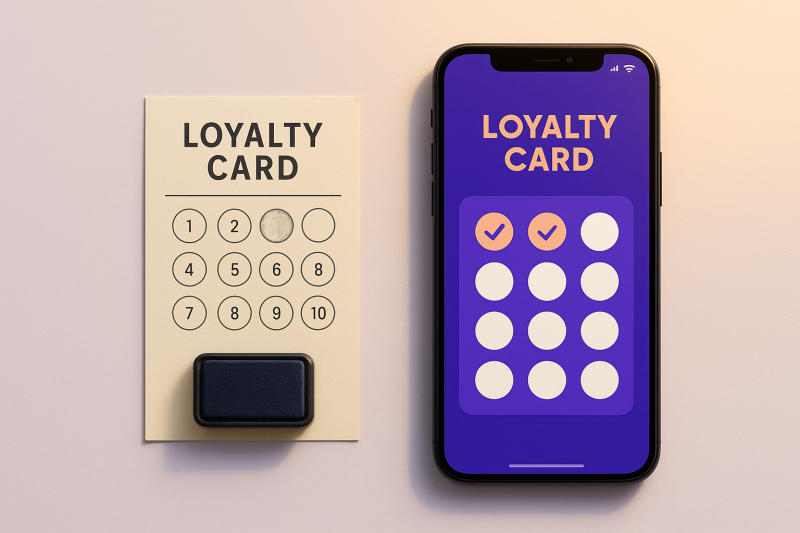
Loyalty programs have always been a proven driver for customer retention, especially for small businesses. Traditionally, paper punch cards were the norm—handed out at the register and marked each time a customer made a purchase. However, with the growing prevalence of smartphones and digital wallets, digital loyalty cards have rapidly gained traction. But when comparing digital loyalty cards vs paper punch cards, which truly delivers more for your business—and your customers?
Paper punch cards, sometimes called stamp cards, are simple physical cards on which businesses mark each transaction or visit—typically with a hole-punch or stamp. After a certain number of purchases, the customer receives a reward, such as a free coffee or discount.
Digital punch cards or membership cards move the entire loyalty experience to the customer’s smartphone wallet. With a digital membership card, customers access their card from their phone, and their visits and rewards are tracked automatically via QR code, punch, or other digital validation methods.
| Feature | Paper Punch Card | Digital Loyalty Card |
|---|---|---|
| Setup Speed | Instant (print cards) | Quick (minutes to register & launch) |
| Cost (Long-Term) | Ongoing printing & reorders | Low SaaS subscription, no printing |
| Fraud Resistance | Low | High (digital validation) |
| Branding | Limited space | Dynamic, custom designs |
| Data Collection | No | Yes |
| Communication | No | Yes (push, SMS marketing & notifications) |
| Customer Engagement | Passive | Active (reminders, campaigns) |
| Integration | No | Yes (with Make.com, CRM/webshop) |
| Environmental Impact | Wasteful | Eco-friendly |
| Tracking & Reporting | Manual/none | Automated, real-time |
| Personalization | Impossible | Easy (targeted offers) |
| Customer Experience | Easy to lose/forget | Always handy |
Unlike paper punch cards, digital solutions allow small businesses to collect valuable customer data—such as visit frequency, purchase habits, and demographic details. With these insights, you can:
With digital loyalty cards, you can keep in touch with your customers long after their visit. Send time-sensitive promotions, event invitations, or new product announcements via push notifications or SMS (for marketing and updates). Automated workflows through Loyaltycardtools’ integration with Make.com can trigger messages based on specific events, ensuring every interaction is timely and relevant.
One of the biggest advancements with modern loyalty solutions is powerful integration. Platforms like Loyaltycardtools offer robust API access and native connections through Make.com, so your loyalty platform can sync to your core business tools—like your CRM or webshop. This automation means:
A local coffee shop distributes paper punch cards. Many customers enjoy using them—but the staff frequently runs out of cards, some customers try to stamp extra punches themselves, and cards are often lost or forgotten. The owner has no way to contact regulars about new offers, and staff spend precious time dealing with punch validation at busy hours.
A boutique retailer switches to a digital punch card program using Loyaltycardtools. Customers add the card to their Apple Wallet or Google Pay. The retailer sends out a promotion for double punches on slow weekday afternoons, boosting midweek sales. Lost cards are a thing of the past. Staff can dedicate more time to customers, since punches are scanned and tracked automatically. The owner uses customer data to send targeted SMS notifications for exclusive VIP events.
A fitness studio implements a digital membership card—customers scan in upon arrival, automatically recording attendance. The studio integrates the system with its CRM via Make.com, so class bookings and attendance flow seamlessly into loyalty tracking. Members receive push reminders before expiring sessions, driving re-bookings.
Ready to get started? Start your free trial
While paper punch cards are familiar and easy to launch, they are quickly being outpaced by the advantages of digital loyalty solutions. Digital punch cards and membership cards give you vastly better tools for engaging your customers, reducing fraud, and optimizing your rewards program for more profitable results. They provide data-driven insights and communication capabilities that empower small business owners to compete with larger brands.
Platforms like Loyaltycardtools combine ease of use with powerful automation and integration, making digital loyalty accessible to even the smallest business—without technical headaches or major upfront investment. If you’re ready to maximize engagement, streamline operations, and grow repeat business, the choice is clear.
Although most small businesses can benefit from going digital, certain sectors see especially strong impact. Explore more about your sector’s potential:
Printing, designing, and constantly reordering paper punch cards results in ongoing costs that grow as your customer base does. Digital loyalty platforms like Loyaltycardtools operate on an affordable subscription basis—with no need for reprints. And digital delivery means instant updates and changes without waste.
See detailed pricing for a transparent look at costs vs. savings.
With consumer expectations rising and smartphone usage at an all-time high, customers now expect frictionless, personalized, and environmentally friendly rewards. Digital loyalty solutions meet these demands—with QR codes, mobile wallet integration, cross-device support, and dynamic communication. As technology continues to influence how people shop, engaging customers where they already spend their time (on their phones) is the surest way to future-proof your loyalty strategy.
Take the next step to upgrade your program—Start your free trial
Empower your loyalty program to compete with the big brands, while keeping that all-important personal touch that sets small businesses apart. Ready to try digital loyalty for yourself? Start your free trial
The main difference is that paper punch cards are physical cards requiring manual validation and tracking, whereas digital loyalty cards are stored on your customer's phone and are validated and tracked electronically for accuracy, security, and data collection.
Yes. Digital loyalty cards use secure validation methods like QR codes, reducing fraud and manipulation compared to manually stamped or punched paper cards.
Typically, digital loyalty programs are more cost-effective in the long run, eliminating recurring printing costs and manual labor, and improving marketing ROI with direct outreach.
Modern mobile wallets are user-friendly, and most customers already use similar apps. Businesses can assist onboarding and provide simple instructions to maximize adoption.
Absolutely. Digital loyalty solutions like Loyaltycardtools allow full customization—branding, colors, logos, and tailored messages—creating a seamless brand experience.
Yes. Loyaltycardtools integrates with existing CRMs and webshops via Make.com, automating reward assignment and customer data updates.
Promote the convenience and benefits (never lose the card, get exclusive notifications, eco-friendly). Offer a bonus reward for signing up digitally.
Digital cards are usually linked to an account or email and can be reinstalled on a new device, unlike paper cards which are lost permanently.
While especially valuable for cafes, restaurants, wellness, and retail, digital loyalty solutions can be tailored to suit most small businesses—delivering automation, insights, and improved engagement across industries.


LoyaltycardTools © 2026 — All rights reserved. Terms and conditions | Sitemap